Rumination rarely helps us personally or professionally. It makes us feel busy without moving us forward.
When we are challenged, the mind often starts looking backward. It returns to a time when we felt safer, more certain or more confident about our choices. The past begins to look unusually attractive because we already know how it turned out.
That does not mean the past was better. It means uncertainty has edited out the difficult parts.
Looking Backward Is Information
The instinct to look backward is difficult to stop because it is human nature. But we can use it as information.
If your mind keeps returning to an earlier time, it may be telling you that something in the present needs deeper thought. The answer is not necessarily hidden in the past. The rumination may simply be revealing that today’s challenge has not been understood well enough.
That leaves two reasonable choices.
You can do the deeper work required to develop solutions for the problem you have now. Or you can deliberately leave the problem alone for a while and see whether it changes without your involvement.
Neither choice requires spending another week replaying a decision that can no longer be changed.
Not Every Problem Needs Your Attention
We often assume that noticing a problem creates an obligation to solve it.
It does not.
Some problems are temporary. Some belong to someone else. Some disappear when circumstances change. Others become larger because our attention gives them energy, importance and a permanent meeting on the mental calendar.
This is especially true when we are reacting to uncertainty. We may keep examining a problem because doing something feels more responsible than doing nothing. But attention is not automatically progress. Sometimes it is simply interference.
Letting a problem sit is not the same as ignoring it. It can be a deliberate decision to stop pushing long enough to discover whether the situation actually requires us.
The Past Cannot Solve a New Problem
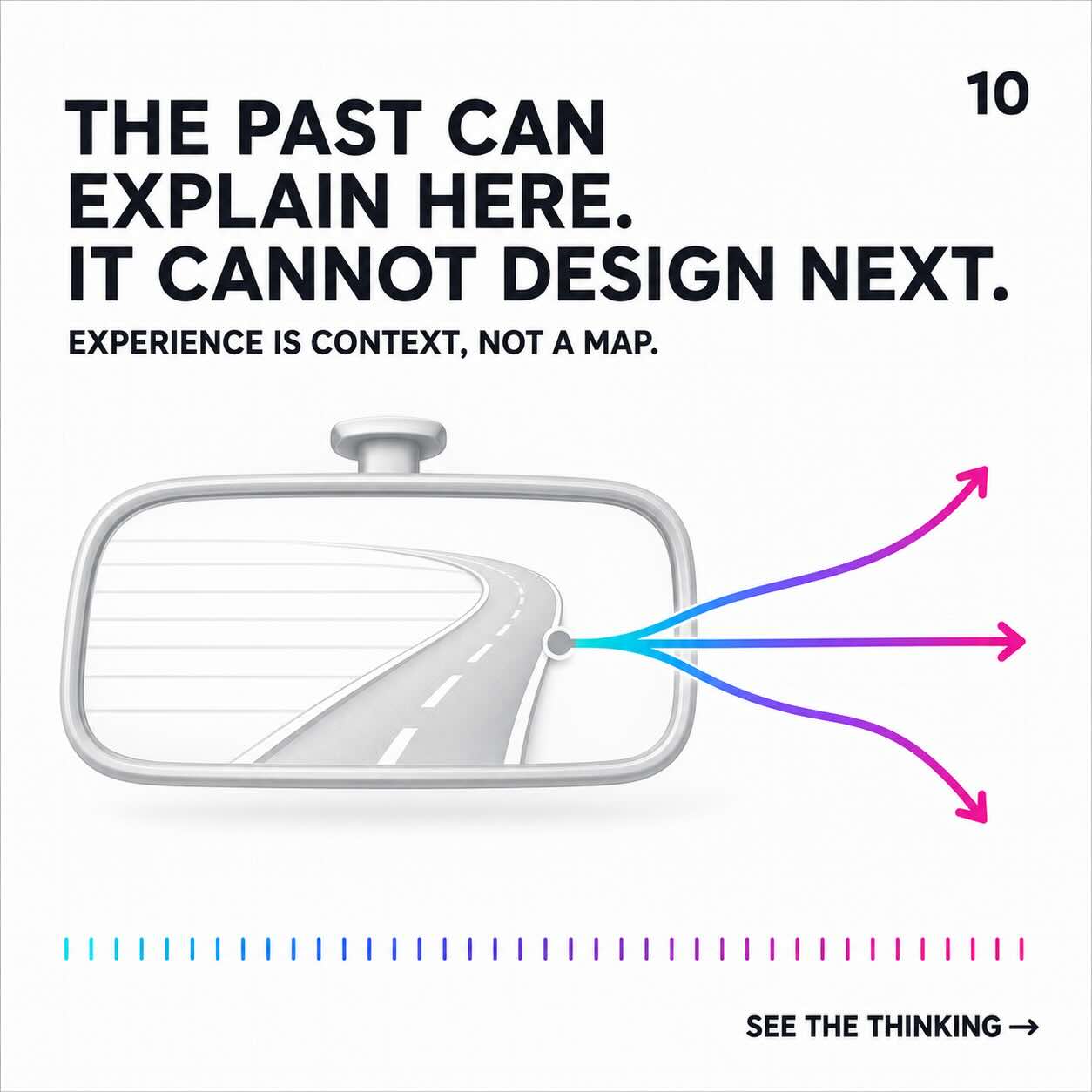
Experience still matters. It can reveal patterns, remind us what we survived and help us avoid repeating an old mistake.
But the past cannot tell us exactly what will work next because the people, conditions, risks and opportunities have changed. Trying to recreate an earlier sense of certainty can prevent us from understanding the decision in front of us now.
The past may explain why we feel uncomfortable.
It may even reveal that deeper work is needed.
But it should not become the place we hide while waiting for the future to feel familiar.