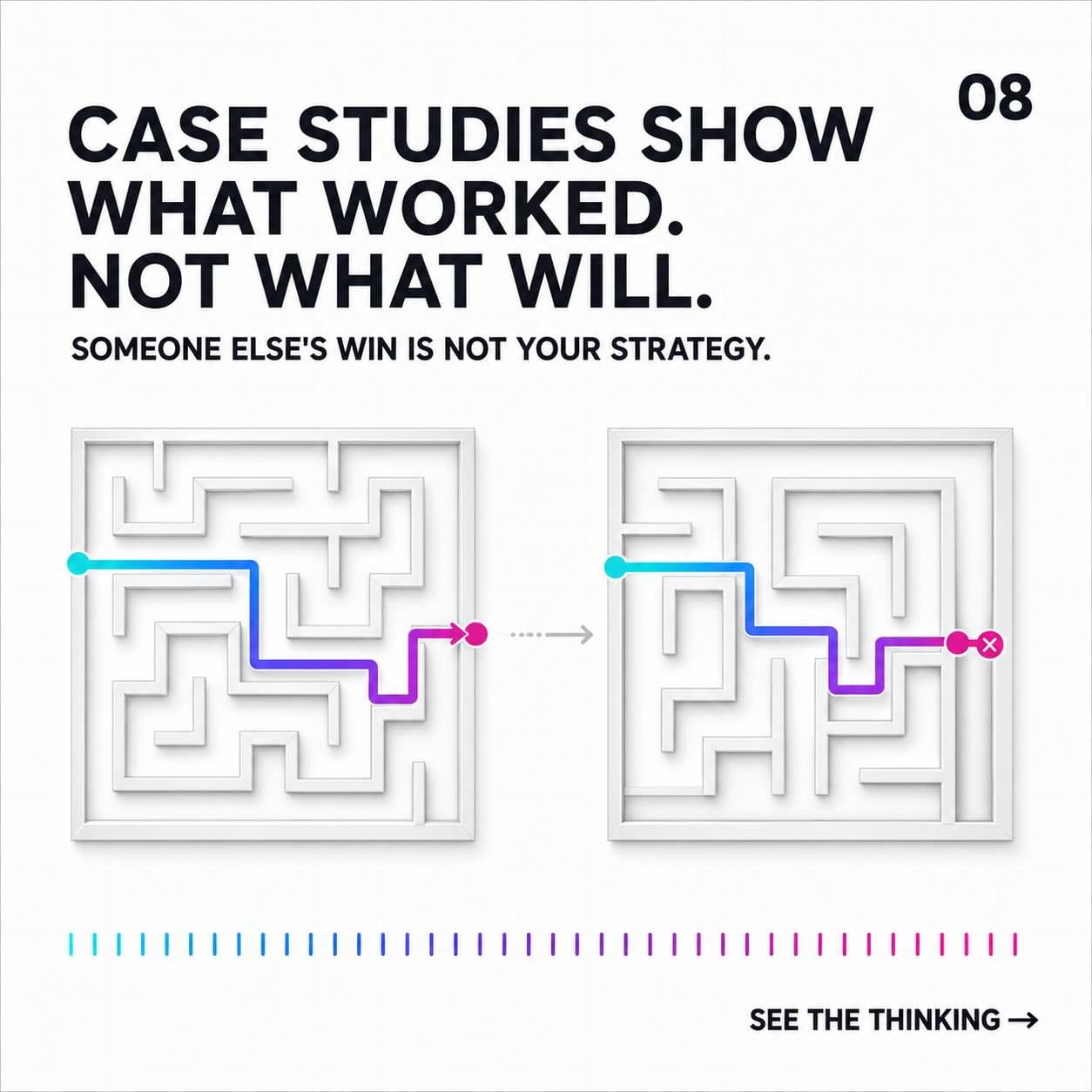
Case studies are often used to protect the person making the decision, not to make a better decision.
If the decision goes badly, management can point to another company that succeeded with the same approach. The strategy may have failed, but at least it arrived with respectable references and someone else to blame.
That is not risk management. It is career protection wearing a business strategy costume.
Management and Ownership See Risk Differently
Ownership is responsible for growing the company. Management is often more concerned with protecting its position inside it.
That difference matters.
An owner may accept an uncomfortable risk because remaining where the company is creates a larger one. A manager may prefer the familiar decision because familiar failure is easier to defend than an unfamiliar opportunity.
Nobody gets fired for producing a case study explaining why the decision seemed reasonable. They may still lose the opportunity, the customer or several years of growth, but the presentation will be lovely.
Someone Else’s Success Is Not Your Answer
A case study tells you what worked for another company under a particular set of conditions.
It does not tell you whether those conditions still exist. It does not account for your timing, customers, culture, capacity, competition or appetite for risk. Most importantly, it has nothing to do with the fear surrounding the decision you need to make now.
Someone else’s success cannot remove that fear. It also cannot solve the current problem for you.
Case studies can provide information. They can reveal possibilities and show how another company approached a similar situation. The mistake is treating that history as permission to stop thinking.
Growth Eventually Leaves the Safe Circle
Every person and company has a risk profile. The answer is not to ignore it, pretend fear does not exist or start making reckless decisions because somebody used the word innovation in a meeting.
The answer is to step up within that risk profile.
Growth requires becoming comfortable enough to move beyond the circle that once protected you but now keeps you in place. That circle may be built from experience, accepted practices, previous successes or a collection of case studies proving that everyone else remained inside it too.
Use case studies as information, not insurance.
They can show you where somebody else went.
They cannot decide where you should go next.