
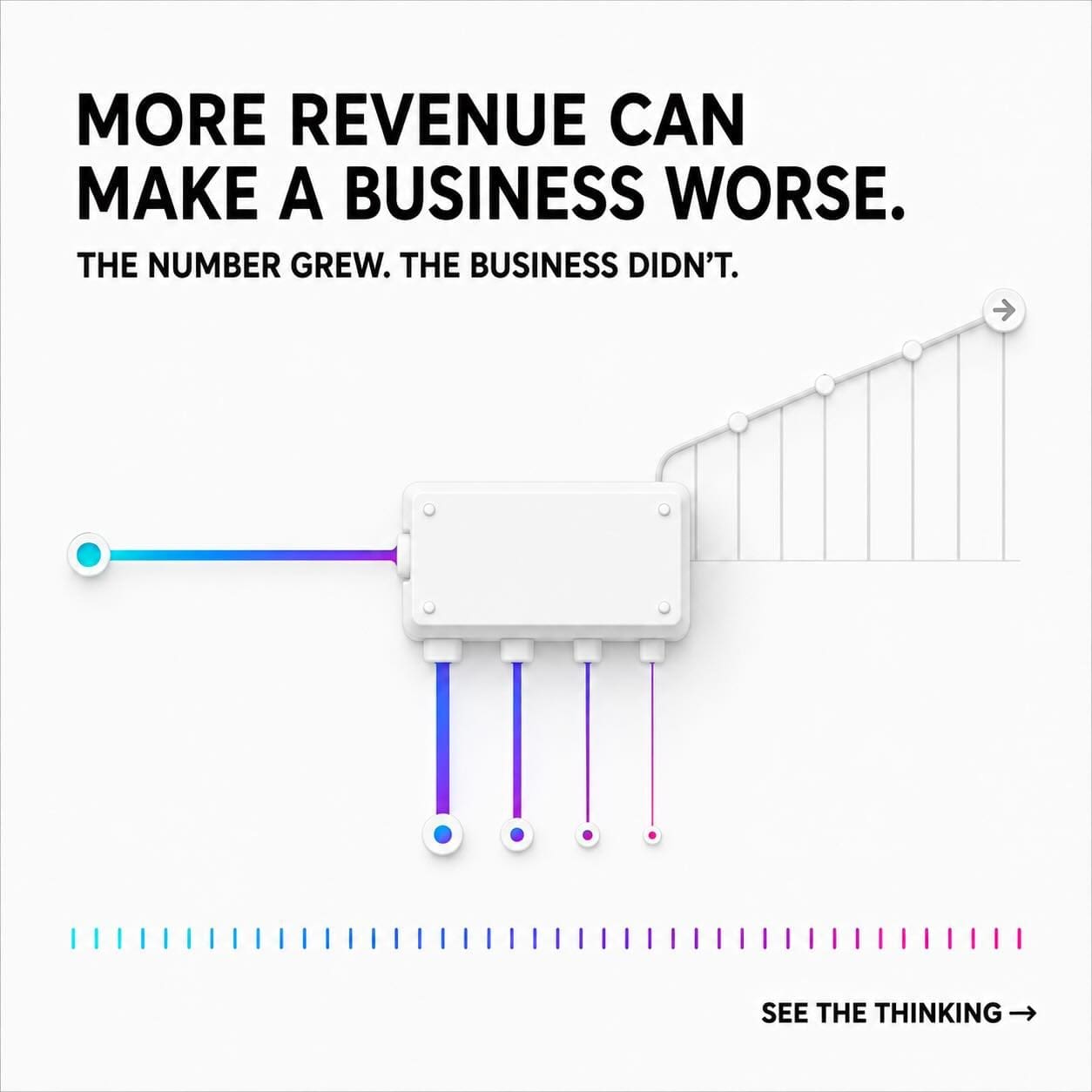
Revenue is not automatically good news.
Sometimes it is an expensive way to avoid admitting the business model is getting worse.
That sounds wrong because revenue is the number businesses are trained to celebrate. It leads the monthly report, appears in the largest font and gives everyone something encouraging to discuss before asking what happened to the cash.
Revenue went up.
Excellent.
What did the company have to become to produce it?
That question usually arrives later, after the new customers need service, the custom promises need delivery, the employees need managing and the invoices begin aging with the confidence of fine wine.
By then, the company has already paid for the growth. It just has not received the entire bill.
Revenue brings an operating model with it
Revenue never arrives alone.
It brings expectations, payment terms, delivery requirements, exceptions, meetings, software, employees and decisions. Every additional dollar asks the company to do something in return.
The useful question is not whether revenue increased. It is whether the business became more profitable, more repeatable and more strategically valuable while producing it.
Consider two companies that each add $1 million in annual revenue.
The first sells a repeatable offer to many customers who pay before delivery. The work uses existing capacity, requires little customization and creates information that improves the offer for everyone.
The second adds one large customer. The price is lower. Payment arrives in 60 days. Reporting is unique. Senior people remain involved. The company builds capabilities nobody else has requested.
Both companies report the same growth.
Only one built a better business.
The other accepted a well-dressed dependency.
Revenue tells you how much the customer agreed to pay. It does not tell you what the company agreed to become.
Margin disappears into the organization
Most companies know the direct cost of delivering their work. That is not the same as knowing what the revenue actually costs.
A project may look profitable before the extra calls, revisions, exceptions, senior attention, delayed approvals and internal coordination are counted. Custom work is particularly talented at protecting its apparent margin by scattering its real cost across the organization.
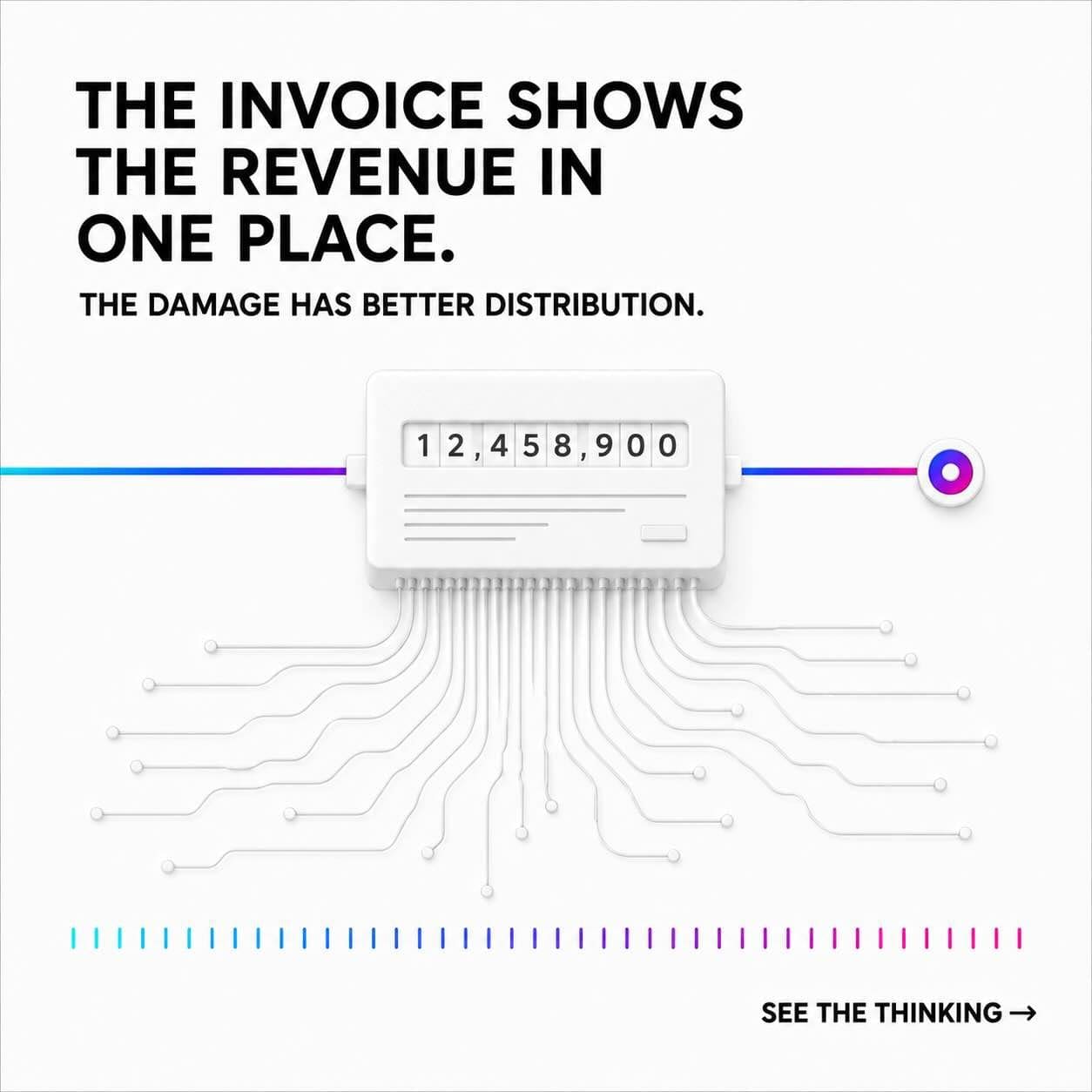
The invoice shows the revenue in one place.
The damage has better distribution.
That is how a company becomes busier while producing less economic value per employee, per hour and per decision.
The usual calculation is:
Revenue minus direct cost.
The more honest calculation is:
Revenue minus delivery, complexity, cash, management attention and the opportunities the company could not pursue because this work occupied the system.
Some revenue remains attractive after that calculation.
Some becomes surprisingly average.
Some should be escorted from the building.
A profitable sale can still consume cash
Growth can also create a funding problem while the income statement is busy looking successful.
The company pays employees, vendors, freight, software and taxes before the customer pays the invoice. The faster sales grow, the more cash the company may need to support the gap.
Success creates a larger working-capital requirement.
The chart moves up. The room for error disappears.
If pricing does not compensate for that burden, the company is financing the customer’s business while congratulating itself for winning the work.
Payment terms are part of strategy.
So are deposits, billing milestones, inventory requirements and the time between spending a dollar and recovering it. These are not administrative details appended after the commercial decision. They determine whether growth produces cash or merely develops an appetite for it.
A company can grow revenue, report a profit and become less stable at the same time.
The numbers do not contradict one another. They are answering different questions.
Revenue trains the company
The work a company accepts changes the company.
It determines which capabilities get built, which employees get hired, which processes become normal and which problems receive attention.
Revenue is not merely money. It is a vote for a particular version of the business.
Repeatedly accept highly customized work and the company becomes a customization business.
Accept work that requires the owner in every meaningful decision and the company builds owner dependence.
Discount to win volume and the company builds a cost structure that needs volume to keep arriving.
None of this makes the customer unreasonable. Customers are supposed to pursue their own advantage.
They are not responsible for protecting your business model.
That responsibility belongs to the company deciding which revenue to accept, redesign or reject.
Start with the business the revenue should create
The usual growth question is:
How do we produce more revenue?
Reverse it:
What kind of business should the revenue create?
Perhaps the desired ending is higher owner income without a larger team.
Perhaps it is stronger cash flow, higher margins or more repeatable delivery.
Perhaps it is a company that can operate without the owner touching every important decision.
That ending determines which revenue is useful.
If the goal is repeatability, revenue requiring constant customization moves in the wrong direction.
If the goal is cash generation, long payment terms and heavy upfront delivery costs cannot be treated as harmless contract language.
If the goal is margin, exceptions and senior attention must become visible costs instead of disappearing into overhead.
If the goal is strategic freedom, revenue that dictates the company’s future capabilities deserves a more skeptical review.
Once the ending is clear, growth stops being a volume contest. It becomes a design decision.
The choice is not simply yes or no
Revenue that does not fit the desired business does not always need to disappear. It may need to be redesigned.
There are three executable paths.
The company can change the work by standardizing delivery, limiting exceptions or separating the valuable core from the custom debris surrounding it.
It can change the economics through pricing, deposits, minimum commitments, payment terms or explicit charges for complexity.
Or it can decide the revenue is incompatible with the business it intends to build.
Each path has a price.
Standardization may lose customers who value exceptions. Better terms may slow sales. Rejecting the work may create an uncomfortable blank space in the forecast.
But continuing also has a price. It is paid through margin, cash, complexity and control, where companies have become remarkably skilled at pretending not to see it.
Strategy does not eliminate the price.
It decides which price builds the right business.
Measure what the revenue leaves behind
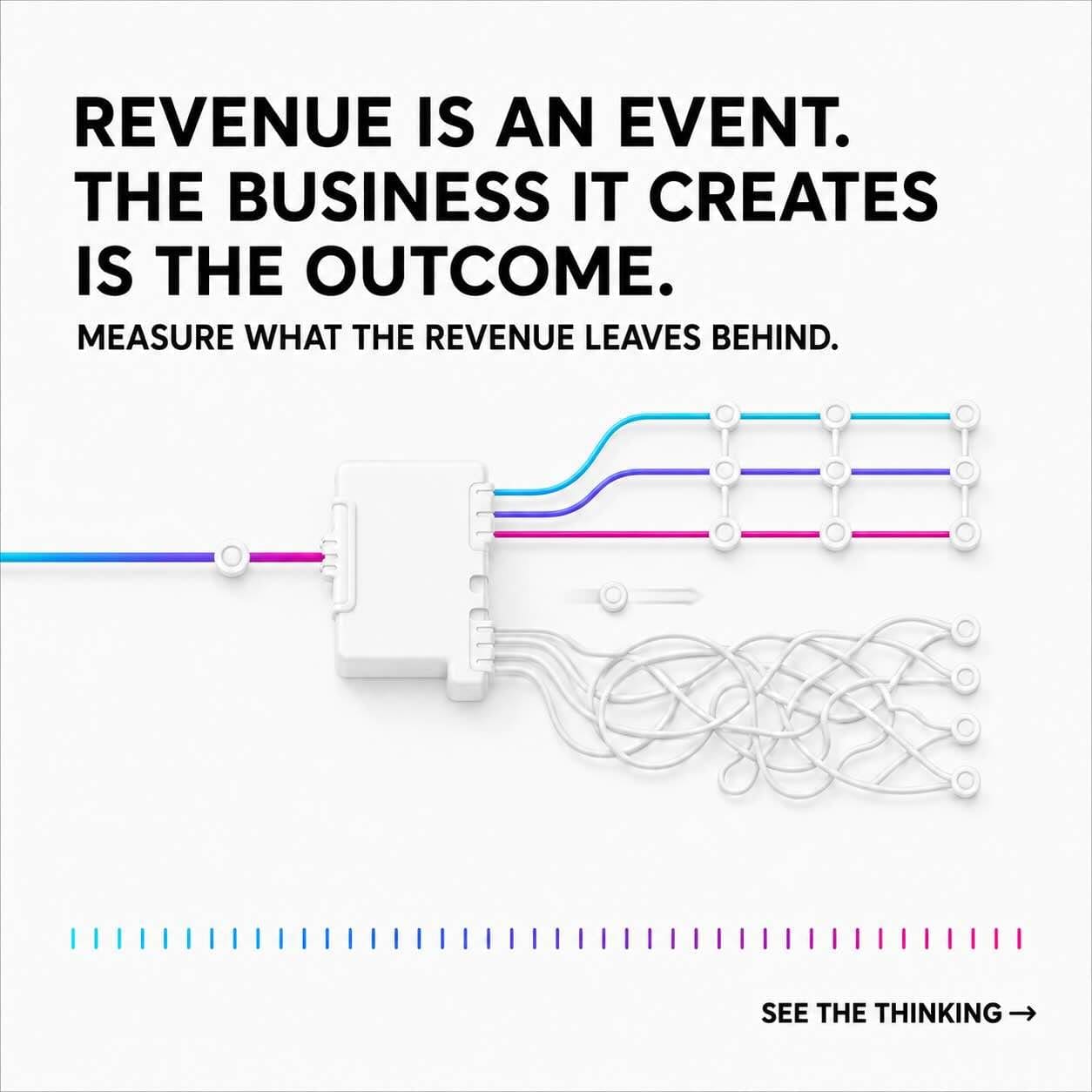
Revenue is an event.
The business it creates is the outcome.
After the work is delivered and the customer pays, what remains?
A repeatable capability? Better information? Stronger margins? Improved cash flow? A team capable of operating with more independence?
Or did the company inherit more exceptions, more dependence and another reason the owner cannot step away?
More revenue can fund investment, expand capability and create strategic freedom.
It can also make a business larger, busier and increasingly difficult to change.
The difference is not whether the revenue grew.
The difference is whether the company decided what the growth was supposed to build before accepting everything willing to pay an invoice.