
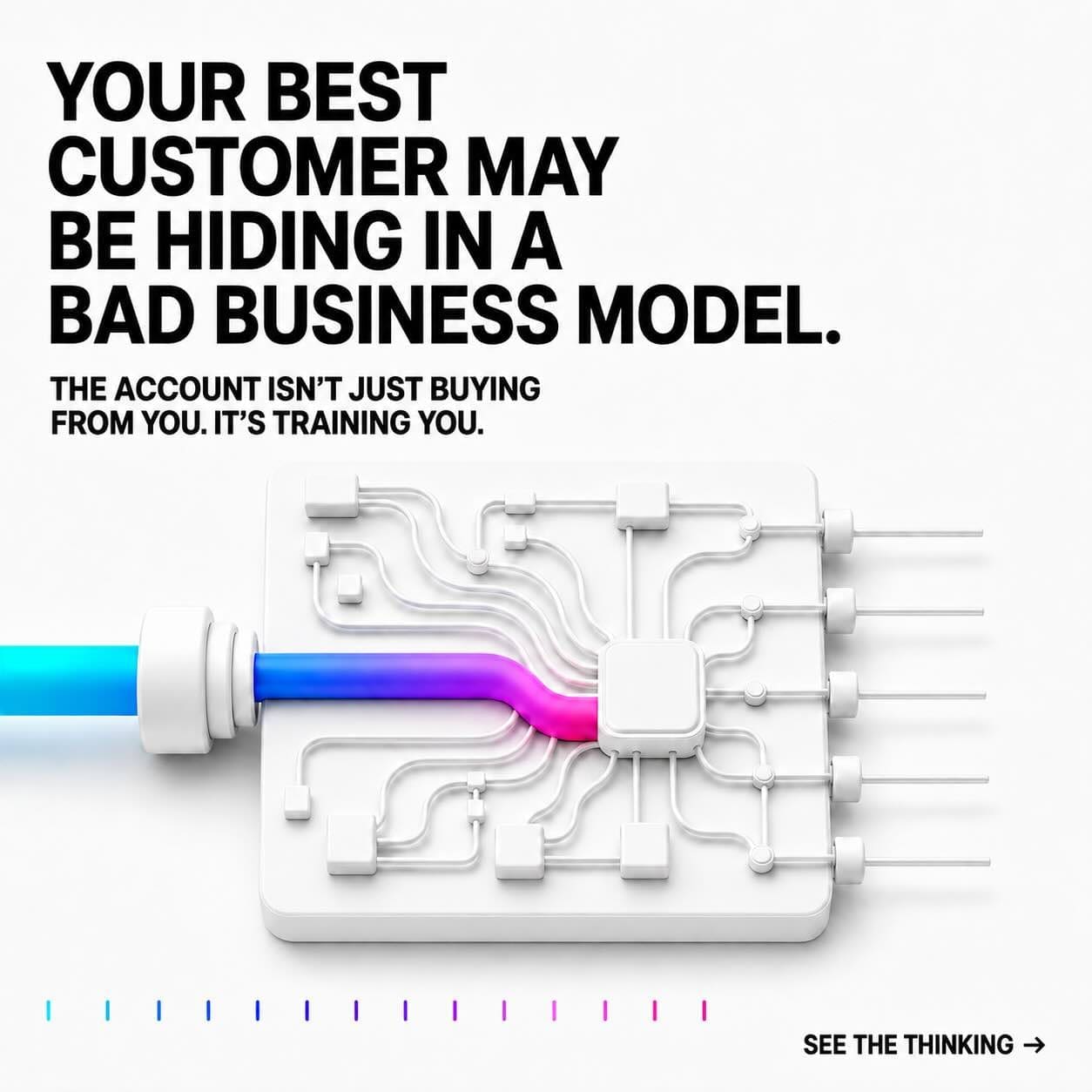
The customer responsible for your growth may also be preventing you from building a better company.
That is difficult to see because large customers arrive wearing the costume of success.
They produce impressive invoices. They justify new hires. They make the pipeline look less frightening. Their logo improves the sales deck, and their renewal can turn an anxious quarter into a respectable one.
So the company calls them a strategic account.
Sometimes they are.
Sometimes “strategic” is simply the word used when nobody wants to calculate the cost of saying yes.
A large customer does not merely buy from the company
A large customer trains the company.
Every special request teaches the team what deserves attention. Every exception becomes a candidate for the next standard process. Every urgent escalation pulls senior people toward one customer’s operating model and away from the company’s own.
Over time, the organization learns a very specific lesson:
When this customer asks, the business changes.
That change may be worthwhile. A demanding customer can force better quality, stronger systems and capabilities that later become valuable across the market.
But that outcome is not automatic.
The customer may instead teach the company to underprice complexity, normalize exceptions and build expertise that nobody else wants to buy.
The revenue remains visible.
The training cost disappears into the organization.
Custom work has a habit of becoming the business
The first exception usually sounds harmless.
The customer needs a different report. A special workflow. A unique integration. A slightly altered service level. One more approval. A standing call involving three senior employees who have apparently been waiting their entire careers to discuss the formatting of a spreadsheet.
The work gets done because the account matters.
Then the exception needs maintenance. New employees must learn it. Software has to accommodate it. Sales begins promising variations because the company has already demonstrated that variations are possible.
Soon the company is not selling a repeatable offer with occasional customization.
It is running a custom business while continuing to price itself as though the offer were standard.
The distinction matters because custom revenue scales differently. It requires more judgment, more coordination and more senior attention. It produces knowledge that is harder to transfer and capacity that is harder to predict.
The customer may still be profitable on the project report.
The business model can still be getting worse.
Concentration is not only a revenue risk
Customer concentration is usually described as a financial problem.
If one customer represents 35 percent of revenue, losing the account would hurt.
True, but incomplete.
Concentration also changes decisions before the customer leaves.
The company avoids pricing conversations because the relationship feels too important. Product priorities drift toward one buyer’s preferences. Hiring decisions are made to support one account’s workload. Leaders tolerate payment terms they would reject from a smaller customer.
The customer does not need to issue a threat.
The size of the account conducts the negotiation from an empty chair.
That is strategic dependency: the customer influences the company’s choices because the company no longer feels free to make those choices without considering the customer’s reaction.
Revenue concentration measures what would happen if the customer disappeared.
Strategic dependency measures what the company has already surrendered to keep them.
The best customer should leave something valuable behind
The right question is not, “How much revenue does this customer produce?”
It is:
What becomes more valuable because we serve this customer?
Perhaps the account funds a capability that many other customers will buy.
Perhaps it creates better data, sharper expertise or a stronger reputation in a market the company deliberately chose.
Perhaps it improves delivery discipline, strengthens margins at scale or gives the team experience that reduces future costs.
That is productive concentration. The customer is large, but the relationship builds assets that extend beyond the customer.
Now consider the opposite.
The account requires unique processes, unique reporting and unique institutional memory. The best employees spend increasing amounts of time protecting the relationship. The work cannot be transferred without a ceremonial exchange of passwords, warnings and folklore. The capabilities being built have little value outside the account.
The customer is not strengthening the company.
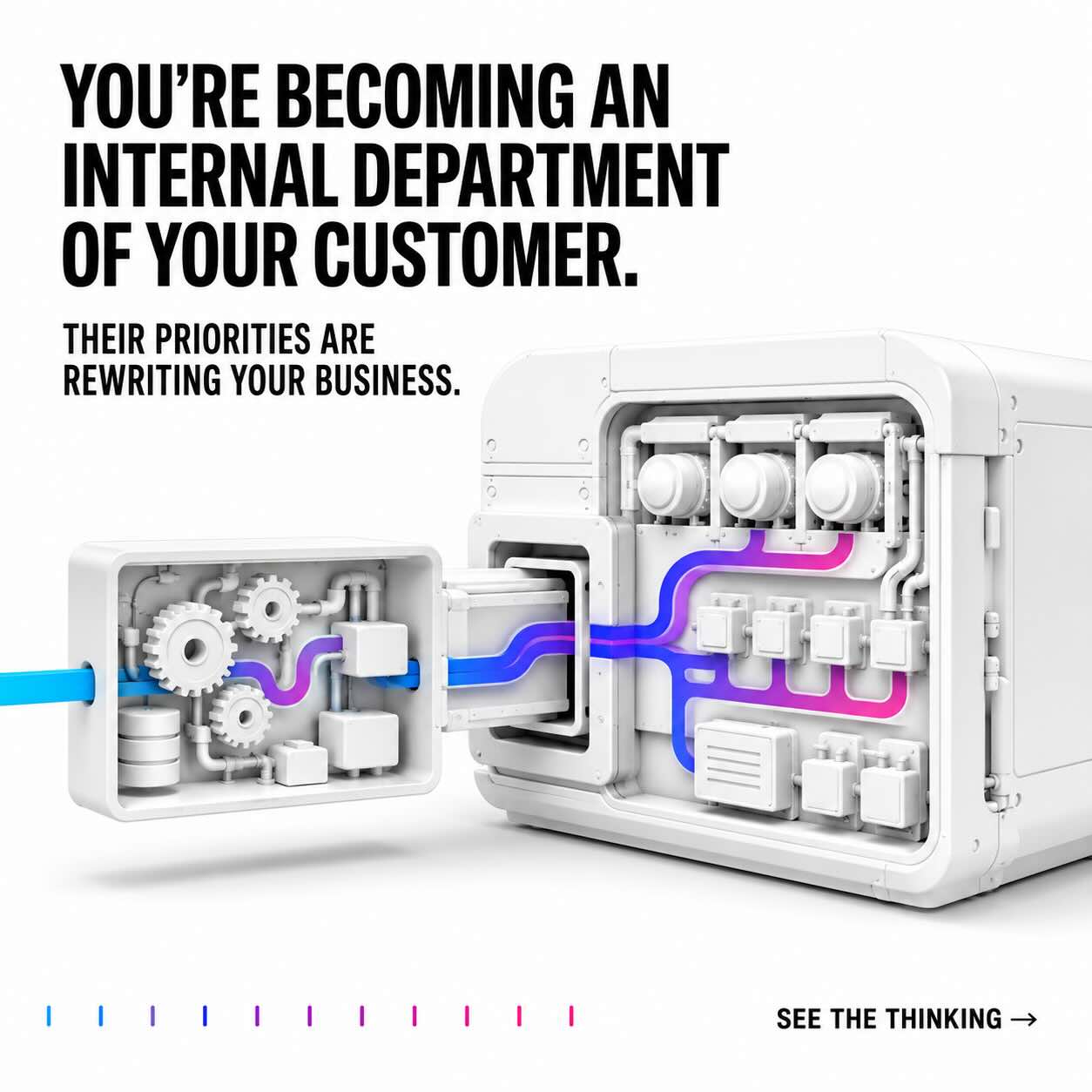
The company is becoming an internal department of the customer.
Profitability is easy to overstate when fear is doing the accounting
Most account reviews count direct labor and obvious delivery costs.
They rarely assign a convincing price to management attention, operational disruption or opportunities delayed because the company’s strongest people were occupied elsewhere.
They also tend to treat future volume as compensation for current concessions.
The price is low now, but the relationship will expand.
The customization is heavy now, but the next phase will be more efficient.
The payment terms are painful now, but the logo opens doors.
Perhaps.
Hope becomes unusually persuasive when attached to a seven-figure forecast.
A more honest account review asks:
- What does this customer consume beyond the hours assigned to the work?
- Which exceptions exist only because of this relationship?
- What would the company stop doing if this account doubled?
- Which capabilities would remain useful if the customer left tomorrow?
- What price would make the full burden economically rational?
If those questions are uncomfortable, the customer may be important for reasons the company has not admitted.
The goal is not to fire the customer
Recognizing dependency does not require a dramatic breakup followed by a triumphant LinkedIn post about boundaries.
Large customers are not villains. They are behaving rationally. They ask for value, negotiate terms and use their leverage. Protecting the business model is not their responsibility.
It is yours.
There are three executable paths.
The first is to redesign the work. Standardize delivery, separate the valuable core from the custom debris and establish which requests require a new scope, price or timeline.
The second is to redesign the economics. Charge for complexity. Change payment terms. Add minimum commitments. Price senior attention as a scarce resource instead of allowing it to leak into the account for free.
The third is to reduce dependence. Grow other accounts, build adjacent offers and create enough commercial freedom that one customer’s preferences no longer function as company strategy.
Each path has a cost.
Standardization may disappoint a customer accustomed to exceptions. Better economics may trigger a difficult negotiation. Diversification takes time and may require investment before the concentration ratio improves.
But dependency also has a cost.
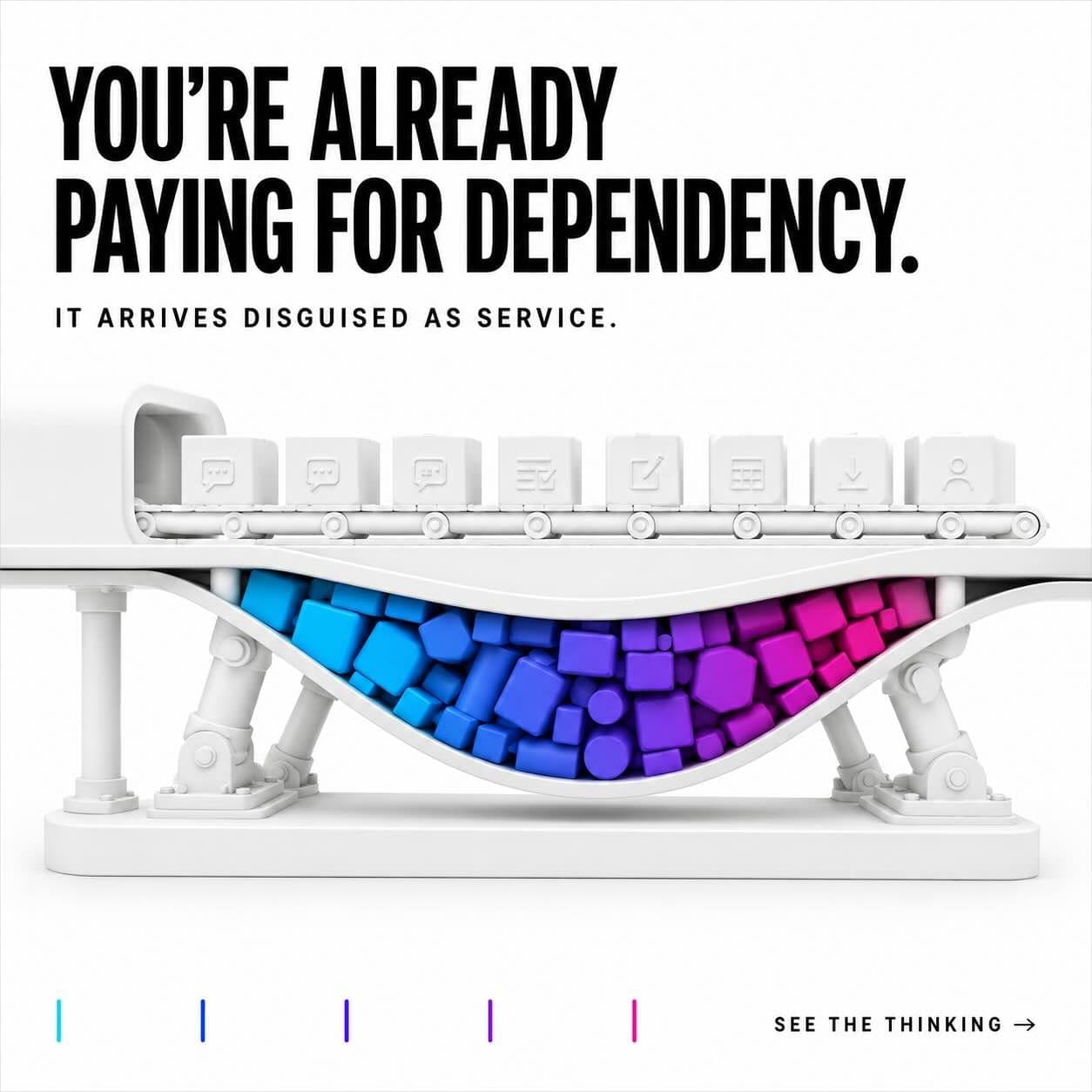
The company is already paying it. It simply arrives disguised as service.
Work backward from a business that can choose
Do not begin with, “How do we keep this customer happy?”
That question makes the current relationship the destination.
Start with the ending:
What must be true for this company to serve large customers without being redesigned by any one of them?
Perhaps no customer should represent more than 20 percent of gross profit.
Perhaps 80 percent of delivery must use a common operating model.
Perhaps exceptions must be priced, documented and reviewed instead of quietly promoted into permanent obligations.
Perhaps customer-specific capabilities need a path to becoming marketable assets—or a price that justifies remaining customer-specific.
Perhaps senior leadership must be able to step away from routine account management without the relationship becoming unstable.
Once the ending is clear, the account can be evaluated against the business the company intends to build.
Some large customers will prove even more valuable than the revenue suggests.
Others will reveal that the company has confused dependence with loyalty, accommodation with strategy and busyness with importance.
Your best customer is not necessarily the one that pays you the most.
It is the one that helps you become a better business without requiring you to become their business.